Tri-Oval Oxidation Ditch System Delivers Reliable Treatment and Operational Flexibility
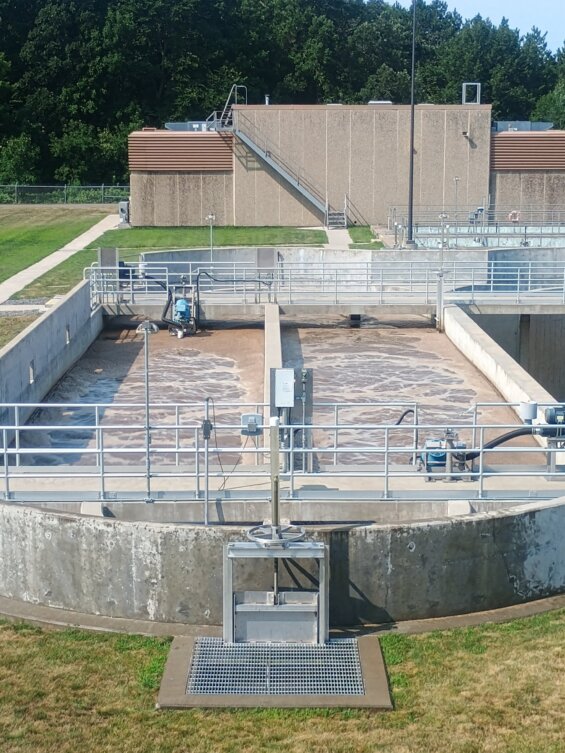
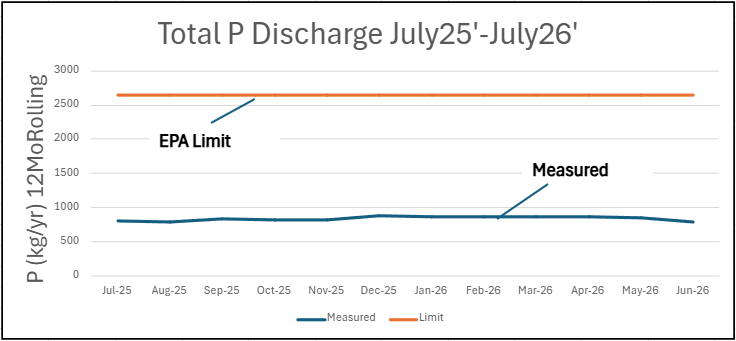
Five years after commissioning its new Tri-Oval Oxidation Ditch System, the Little Falls, MN Wastewater Treatment Plant is delivering reliable treatment, strong phosphorus performance and operational flexibility. The plant consistently operates well below its treatment limits, most notably its 12-month rolling Total P (phosphorus) discharge limit as defined by the EPA, providing operators with confidence in the system’s ability to meet regulatory requirements.
For the plant’s operators and wastewater supervisor, that performance is a source of pride. The system provides the reliability and control they need to confidently treat wastewater before it is discharged to the Mississippi River, helping protect an important regional waterway. Flexible aeration and minimal maintenance have also made the system straightforward to operate and maintain.
Industry
Municipal Wastewater Treatment
Location
Minnesota
technology
Grundfos Tri-Oval Oxidation Ditch System
CHALLENGE
The Little Falls Wastewater Treatment Plant serves the city’s residents, businesses and local industries, including food and beverage and pet food manufacturers. The plant treats approximately 1.0 MGD of wastewater under typical conditions and has a maximum flow capacity of 2.6 MGD.
Before its 2021 upgrade, the facility relied on a high-rate trickling filter and aeration basin with coarse-bubble diffused air. As the equipment and treatment process aged, the city needed to modernize the facility while also preparing to meet a new phosphorus requirement of 2,652 kg/year on a 12-month rolling average.
The city wanted a treatment system that could work within the existing site footprint while providing effective mixing in deep basins and greater operational flexibility. Reducing energy consumption during periods of lower demand was also important, as was the ability to adjust aeration in the future if additional nitrogen treatment requirements were introduced.
Working with SEH engineering, the city evaluated several treatment approaches, including carousel and diffused-air technologies. The project team visited the local Grundfos facility in Chaska, MN as well as an operating Tri-Oval Oxidation ditch in close by Renville, MN to see the technology in operation. The team was particularly impressed by the mixing that the Triton aerators provided.
“The mixing looked amazing.”, recalled Matt Streit, Wastewater Superintendent for Little Falls. “We knew strong mixing would be a requirement for the new treatment system if we wanted to maintain the same footprint.”
The combination of strong mixing, operational flexibility and ease of equipment access ultimately made the Grundfos Tri-Oval system the preferred solution for the plant.
SOLUTION
SEH Engineering & the City of Little Falls ultimately chose Grundfos’s Tri-Oval Oxidation System to meet the needs of their new system requirements. Grundfos provided a two-train Tri-Oval Oxidation Ditch System, with each train equipped with two 60 HP Aire-O2 Triton Process Aerator/Mixers, Universal Bridge Mounts, a dissolved oxygen (DO) probe and Primex control panels.
The Triton aerators provide both aeration and mixing from a single unit, allowing operators to manage the biological process based on actual treatment requirements. The plant operates at approximately a 2 mg/L DO setpoint, while variable-speed operation allows operators to reduce aeration during periods of lower oxygen demand, reducing energy consumption.
The system also provides on/off aeration capability, giving operators additional flexibility as treatment requirements change. This could become particularly valuable if the plant faces future nitrogen treatment requirements that require more precise control of aerobic and anoxic conditions.
RESULTS
Performance against Permit
Five years into operation, the Tri-Oval system has provided Little Falls with the treatment performance and operational flexibility the city was seeking. The plant consistently operates well below its regulatory limits, namely, Total P discharge limit of 2,652 kg/yr (12 mo. rolling average) as defined by the EPA, providing a significant margin of compliance and confidence in the treatment process.
For the operators, that reliability matters every day. The plant team takes pride in knowing the system is performing as intended and that the wastewater leaving the facility is receiving the treatment necessary to help protect the Mississippi River.
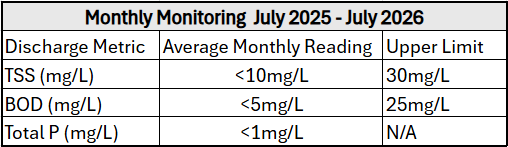
Operators routinely monitor BOD, TSS, phosphorus, pH, dissolved oxygen and nitrogen, providing visibility into overall treatment performance and allowing the process to be adjusted as conditions change.
Mixing
The Triton aerators have demonstrated strong mixing performance in the plant’s 23-foot-deep oxidation ditches. Operators have verified that the basins remain completely mixed to the bottom, helping maintain consistent biological treatment throughout the process.
Operational Flexibility
Variable-speed aeration gives operators the ability to match aeration energy use to actual process demand. During periods of lower demand, aeration can be reduced, helping limit unnecessary energy consumption. The ability to turn aeration on or off also provides flexibility for future process changes and potential nitrogen treatment requirements.
Maintenance
When asked how the maintenance of the Tri-Oval System has gone over the last 5 years, Matt Streit (Wastewater Superintendent) responded “We haven’t had to do anything to them.” Intimate access to the aerators via Grundfos’s patented Universal Bridge Mounts have simplified operation and maintenance by allowing the aerators to be raised for inspection and service using the winch track system. Routine maintenance consists greasing the mixer motor and universal joint, and not much else.
The plant has not needed to replace the aerator bearings, further demonstrating the system’s reliability in operation.
Subscribe to our Newsletter Today! Receive monthly updates on the latest projects like this as well as new water treatment technologies, sustainability, and industry trends, along with exclusive insights and company news and events.
By entering your email, you agree to receive newsletters and promotional updates from Newterra. You can unsubscribe at any time.
We Are Here to Help
Partner with Newterra to maximize your water resources. Together, we’ll design solutions specific to your needs in the food and beverage industry, boosting your efficiency and driving success.